Technical SEO Audits
01Full crawl and log analysis covering index coverage, canonicals, redirect chains, internal link depth, schema validity and Core Web Vitals, prioritised by traffic impact.
- Crawl Analysis
- Log Files
- Core Web Vitals
Asematic delivers SEO services in Bhubaneswar for businesses that need search to produce pipeline rather than screenshots. Technical foundations first, content written to search intent, and authority earned rather than bought — reported against the queries that actually convert.
Technical baseline
The floor a site has to clear before content and authority work can pay anything back.
Twelve blog posts a month, a rising domain authority score, a chart that goes up. None of it is the same as revenue, and the gap between the two is where most SEO budgets quietly disappear.
What it costs you
Rankings that look impressive and sell nothing
Terms are picked for what the searcher is trying to do, not for volume. A page ranking first for a query nobody buys from is a cost, however good the screenshot looks.
What it costs you
A blog written to hit a word count
We study what already ranks and find what every result fails to answer, then write to close that gap. Closing the gap is what earns the position, not matching a competitor's word count.
What it costs you
Backlinks rented from a directory farm
Original data, tools and reference material that publications have a reason to link to, plus outreach qualified on real referring traffic rather than a third-party authority score.
What it costs you
A site Google can crawl but cannot understand
Crawl paths, canonicals, internal link depth, schema markup and Core Web Vitals resolved first, because publishing onto a broken foundation multiplies the problem rather than the traffic.
What it costs you
A monthly report full of impressions and DA
Query-level rankings and clicks connected through to conversions and value, so the question of whether SEO is working has an answer rather than a chart.
What it costs you
Hard-won traffic that arrives and leaves
Ranking is half the job. Message match, proof placement and call-to-action logic are treated as part of the SEO engagement, because the metric that matters is what the visit produced.
Technical, content and authority are not three products to choose between. They are three stages, and doing them out of order is the most common reason SEO spend produces nothing.
Full crawl and log analysis covering index coverage, canonicals, redirect chains, internal link depth, schema validity and Core Web Vitals, prioritised by traffic impact.
Search demand is mapped to the buying stage behind it, then to the pages that should earn it. Every URL ends up with one job, and no two pages compete for the same query.
Briefs and content written against the live SERP rather than a template, with entity coverage, internal linking and schema planned before publication.
Linkable assets built to be cited — original data, calculators, reference guides — with outreach to publications qualified on real referring traffic.
Google Business Profile optimisation, location pages, citation consistency and review flows for businesses that need to be found in a specific city or service area.
Category and faceted navigation architecture, product schema, pagination and canonical strategy for catalogues large enough to waste crawl budget.
SEO timelines are where most agencies are least honest. Here is the realistic shape of a twelve-month engagement, including the window where you should expect very little to move.
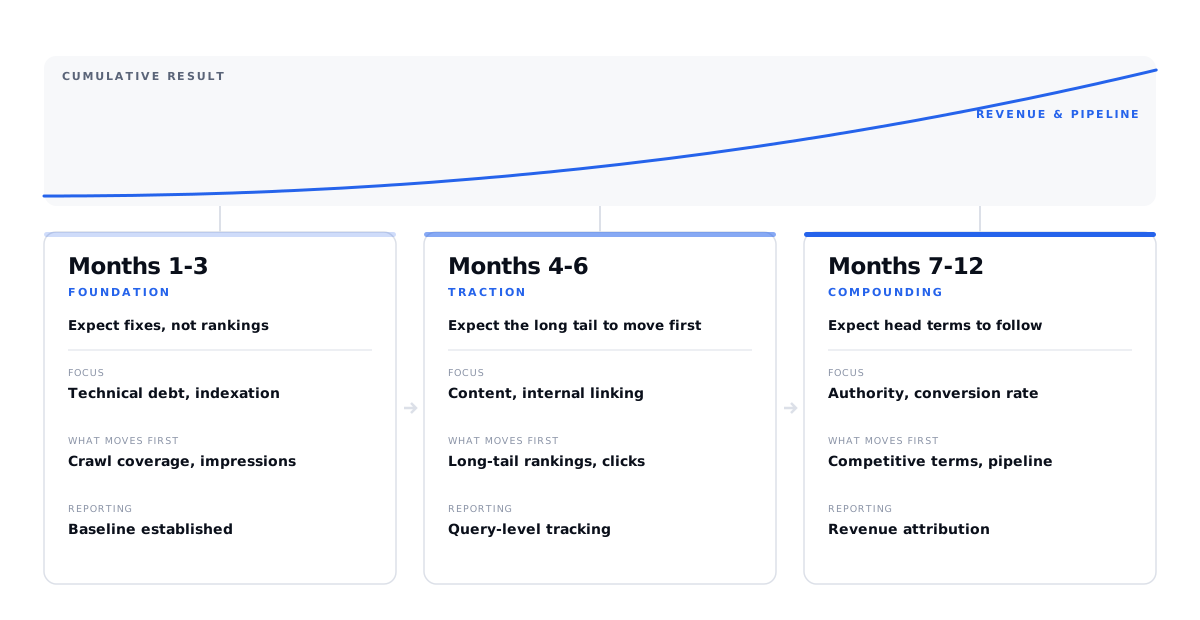
Expect fixes, not rankings
Crawl and indexation problems are resolved, tracking is made trustworthy, and the baseline is established. Movement in this window is mostly in impressions and coverage, not positions.
Expect the long tail to move first
Content and internal linking start landing. Lower-competition, higher-intent queries are where movement shows up before anything competitive does — that is how search works, not a caveat.
Expect head terms to follow
Authority accumulated over the earlier windows starts carrying competitive terms, and the work shifts toward conversion rate on pages that are already ranking.
These fifteen items are not line-items on a quote. They apply to every engagement, on every retainer size, because an SEO programme missing any one of them will eventually plateau for a reason nobody can diagnose.
Tools do not do SEO; they show you where to look. These are the ones we work in, and the data from all of them is reconciled rather than quoted selectively.
Tracking is fixed before decisions are made from it, and technical remediation happens before content spend. Each stage closes with a named deliverable you review.
A full crawl, log review and analytics audit establishes what is broken and what the current position actually is. Tracking is fixed first, because every later decision depends on it being right.
Deliverables
Demand is mapped to buying stage and then to URLs, with cannibalisation resolved and gaps identified against the competitors already holding the positions you want.
Deliverables
The audit findings are implemented in priority order — indexation, site architecture, internal linking, schema and Core Web Vitals — working with your developers or doing the work ourselves.
Deliverables
Briefs written against the live SERP, content produced or edited, and each new page linked deliberately into the existing structure rather than published in isolation.
Deliverables
Linkable assets are built and pitched, results are reviewed against the baseline every month, and the plan is adjusted from query-level data rather than from a fixed content calendar.
Deliverables
Many clients start with the audit alone. It is the honest entry point, and the findings are yours to execute with or without us.
You want to know what is actually wrong
A one-off technical and content audit with a prioritised, costed roadmap your own team can execute. No retainer required, and the findings are yours regardless of what you do next.
Sustained work on rankings and content
A monthly block of technical, content and authority work, planned against query-level performance and reviewed with you each month rather than delivered as a fixed calendar.
Many sites, markets or languages
Programme-level SEO across multiple properties or regions, covering hreflang, template-level fixes at scale, and governance so local teams do not undo central work.
Scope is agreed in writing each month, so you always know what the retainer is buying before it is spent.
The questions buyers actually ask before signing an SEO retainer, including the ones agencies prefer to avoid.
Cost tracks competitiveness and site size rather than a fixed package. A local service business competing in one city needs a fraction of the work a national e-commerce catalogue or a multi-market SaaS site does. The technical surface and the content volume differ enormously. We quote against a written scope after the audit, and the audit itself can be bought standalone if you want the diagnosis before committing to treatment.
Meaningful movement usually begins in months four to six, and compounding results in months seven to twelve. The first three months are largely technical remediation and baseline setting, where progress shows up in crawl coverage and impressions rather than positions. Anyone promising competitive rankings in six weeks is either working in an empty niche or not telling you the truth.
No, and you should be wary of any agency that does. Nobody controls Google's algorithm, and rankings shift with competitor activity and core updates regardless of the work done. What we do commit to is the work itself: a defined scope each month, technical thresholds the site must clear, and honest reporting when something is not moving. That includes telling you when the target was never realistic.
Technical SEO is everything that determines whether search engines can crawl, render, understand and index your pages. That means site architecture, internal linking, canonicals, redirects, schema markup, page speed and Core Web Vitals. It comes first because content published onto a broken foundation compounds the problem rather than the traffic. You pay to produce pages that cannot rank for reasons unrelated to their quality.
Either works. We write briefs against the live search results: what ranks, what those pages cover, and what they all fail to answer. From there we either produce the content ourselves or hand the brief to your team or existing writers. Many clients keep writing in-house because they hold the subject expertise, and use us for the brief, the optimisation and the internal linking.
By building things worth linking to and then telling the right people about them. That means original data, tools and reference material, pitched to publications qualified on their actual referring traffic rather than a third-party authority score. We do not buy links from networks or directories — those work briefly and then become a liability you pay us again to clean up. We also audit your existing profile for toxic links inherited from previous work.
Yes. For businesses serving a specific city or service area, local visibility is often worth more than national rankings. That covers Google Business Profile optimisation and posting, location and service-area pages built to rank individually, citation consistency across directories, and review generation flows. Local schema markup ties it together.
A monthly review covering query-level rankings and clicks from Search Console, organic sessions and conversions from GA4, technical health changes, and what was worked on against what was planned. Reports connect through to conversions and value where your tracking allows it, so the question is whether search produced pipeline — not whether impressions went up.
Last reviewed
Reviewed and updated on this date. Technical claims are re-checked against current standards at each review.
Search brings the visit. What the visitor lands on and what happens afterwards decide whether the retainer pays for itself. These are the pieces that usually sit either side of it.
Send us your domain and the terms your buyers actually search. You will get a read on what is holding the site back, how competitive those terms really are, and whether the work is worth it — before any commitment.